Results from the Project Review and Lessons Learned Meeting

With EU HNS another project comes to a close, therefore, it is imperative for me as Project Manager to reflect on our achievements and shortcomings, identify areas of improvement, and chart a course towards future success. This review provided a unique opportunity for the management to analyse the last project’s performances, assess trends, and develop a strategic plan aligning with future projects’ long-term goals.

The first step in conducting the project review was assessing the past years’ performance. This involved analysing financial data, evaluating key performance indicators, and reviewing operational and administrative processes and workflows. By examining these factors, we gained valuable insights into our strengths and weaknesses and could identify bottlenecks and opportunities for the further design and strategic development of our way of managing multinational projects.

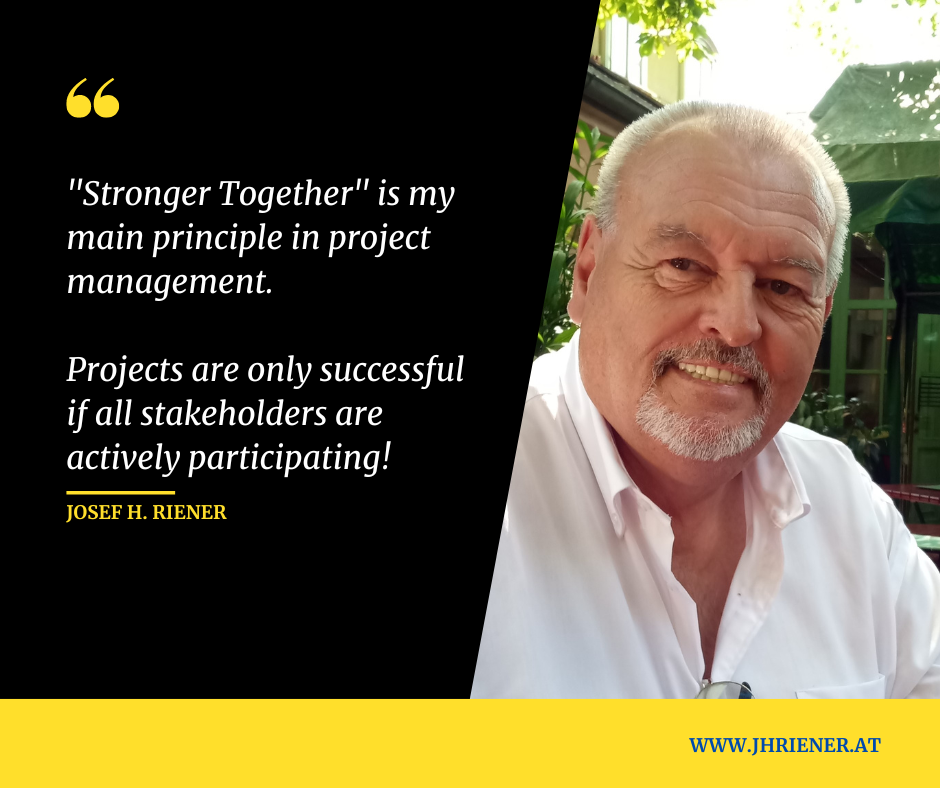
“Stronger Together” is my main principle in project management. Projects are only successful if all stakeholders are actively participating! VTCs and remote work came – triggered by Covid-19 – and will stay. But – for instance, some project tasks are more easily carried out when all members of the project team are co-located. Spontaneous ideas, collaboration, team-building, project alignment, and other project management tasks are simply more manageable when all members of the team are in proximity to each other. Therefore, the importance of physical meetings cannot be underestimated, e.g. a physical Kick-Off meeting. These meetings will be less often but then need more planning, a good agenda, and discipline to conduct the goals of the meeting and get a successful outcome.

During the lessons learned process, resource allocation was a crucial consideration. We evaluated the project budgets, human resources, and technology requirements. Regular reviews and performance assessments helped to track progress, identify bottlenecks, and make necessary adjustments. Project and participants management, travel planning, purchases and media support are key-support activities, which cannot be outsourced. Other support tasks like venue management, and transportation, should be outsourced to keep the managers free for the core activities.

The value of using a swimlane diagram in project management is clear. It involves dividing project tasks and responsibilities into horizontal lanes, typically represented by different partners or departments, and mapping the flow of work from start to finish. It adds value to project management by providing a visual representation of tasks, responsibilities, and dependencies. The roles and responsibilities must be clear and the negative delimitation from other tasks and responsibilities must be clarified in advance. From that decisions, a good RACI matrix can be developed and be part of the project manual.

To effectively plan for the future, we have to stay abreast of trends and conduct a thorough project management analysis. This involved studying trends, analysing new strategies, and assessing the impact of technological advancements. Strategic planning is not complete without defining the necessary actions to achieve the set goals. A cross-functional team structure, common language, and clear communication channels need to be strengthened to safeguard good collaboration and accountability as mentioned: Stronger Together!

EU HNS Lessons Learned Meeting in Warsaw

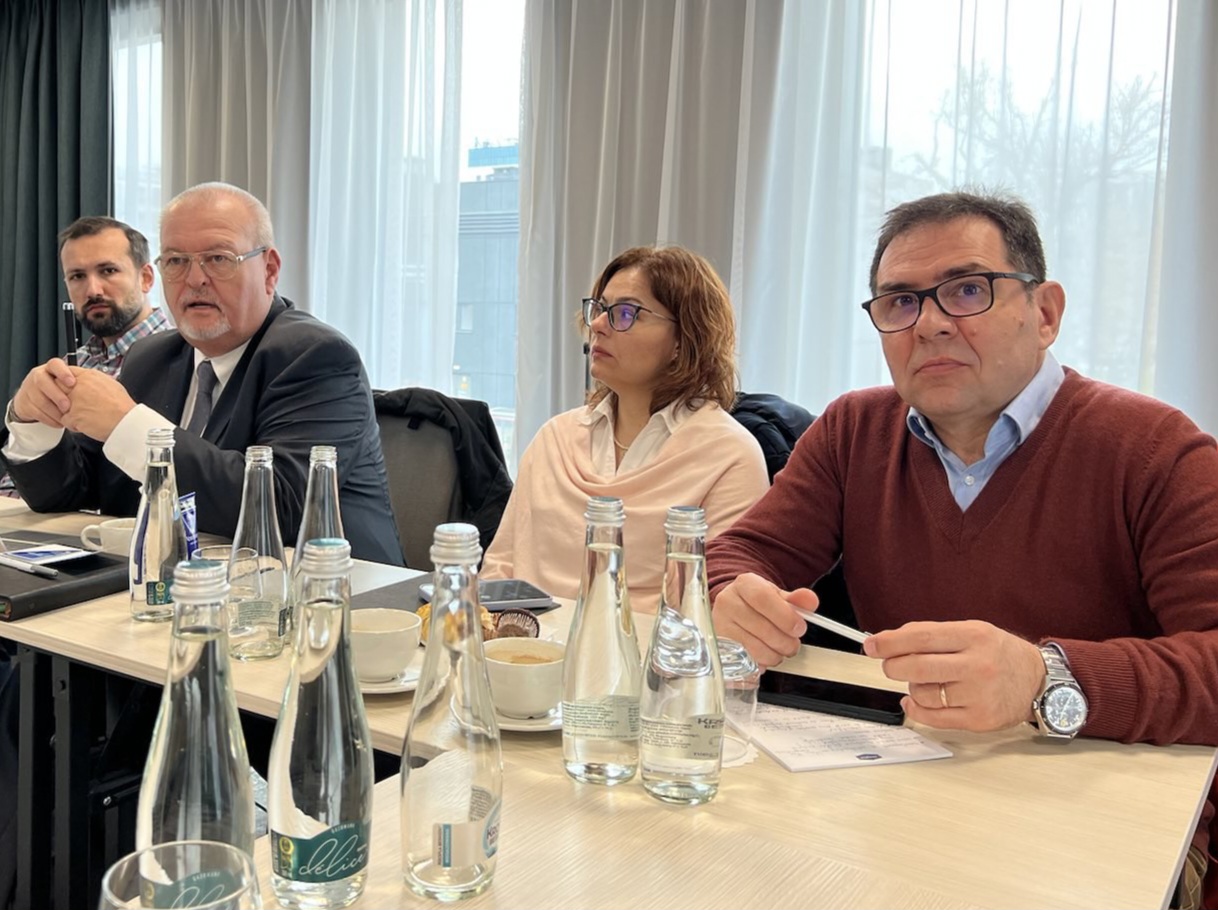
Warsaw, 30th of March: A successful Lessons Learned meeting of our two Host Nation Support exercises was conducted in beautiful Warsaw, Poland. We could analyse the two exercises together with Marcin Kędra, our DG ECHO project officer, Bogdan Pop, Cristian Boeriu, Turucz Emilia and Sedei Artur Vladimir and our friends from iHELP institute.
On most topics there was a common understanding, the environment was not easy, starting with Covid-19, inflation and the ongoing war in Ukraine, neighbouring the Republic of Moldova. One of the conclusions was, that the host countries could learn a lot and were able to improve and adapt their national structures to the EU HNS guideline and the UCPM generally. Due to the efforts of all partners: DSU, Department for Emergency Situations, Ministry of Internal Affairs, Romania, iHELP institute, PubliComm GmbH and the University of Medicine, Pharmacy, Science and Technology of Târgu Mureş, we could solve all challenges of this project. We got great assistance from the host countries, the General Inspectorate for Emergency Situations, Ministry of Internal Affairs, Republic of Moldova, and the Public Security Directorate, Civil Defence Directorate, the Hashemite Kingdom of Jordan.

Our Jordan EU HNS TTX movie is out!

The first EU HNS TTX of our EU-funded project was conducted two weeks ago in Amman, Jordan. We are happy to present you the summary of the EU HNS tabletop exercise conducted in Amman, Jordan. Here is the video from the exercise:
The consortium is led by the Department for Emergency Situations, Ministry of Internal Affairs, Romania, partners are: publiComm, media and consultancy, Austria, iHELP Institute, Poland and the project evaluator, the University of Medicine, Pharmacy, Science and Technology of Târgu Mureş. The exercise was successfully implemented with the support of the Public Security Directorate, Civil Defense Directorate, the Hashemite Kingdom of Jordan.

EU HNS TTX Jordan successfully conducted

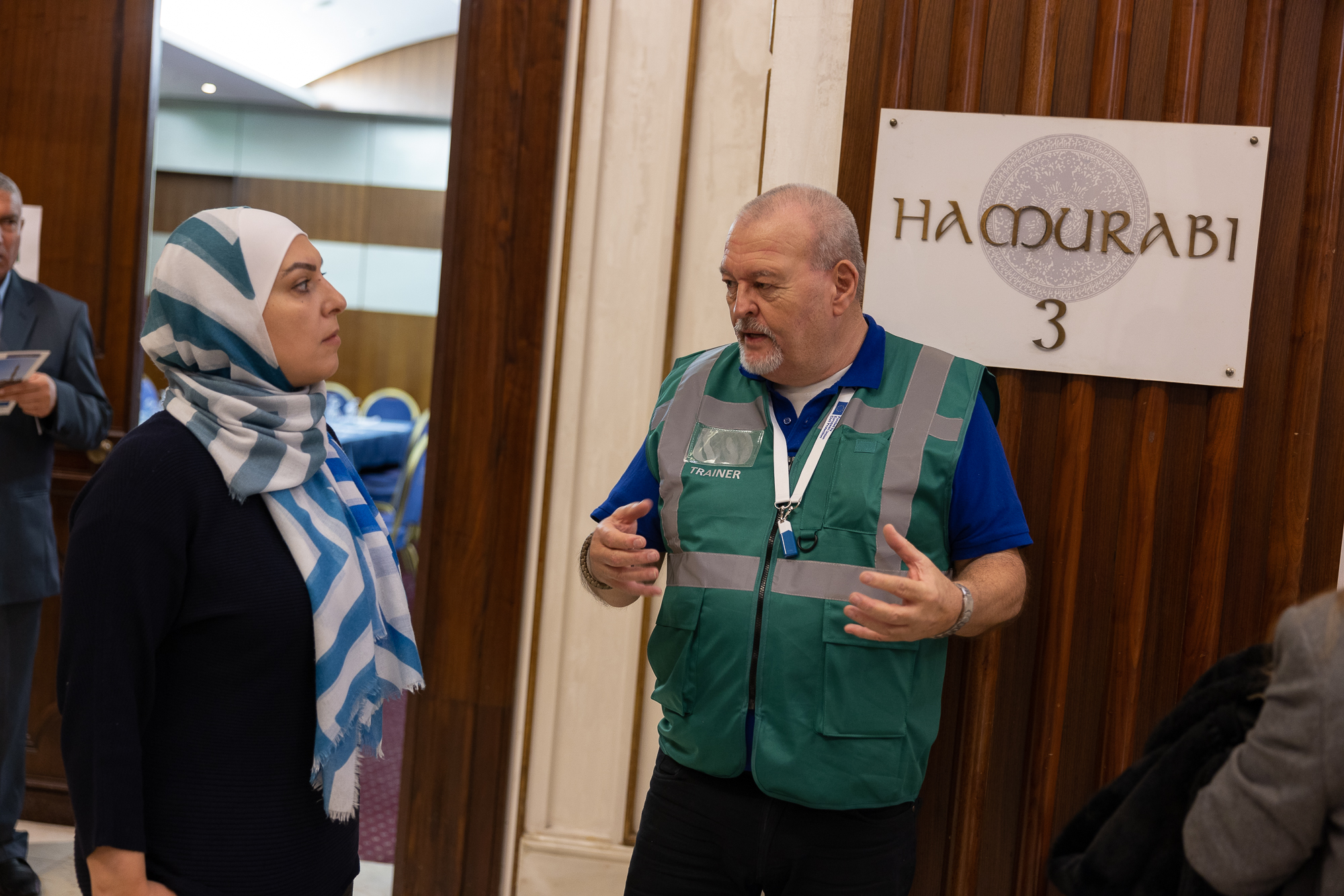
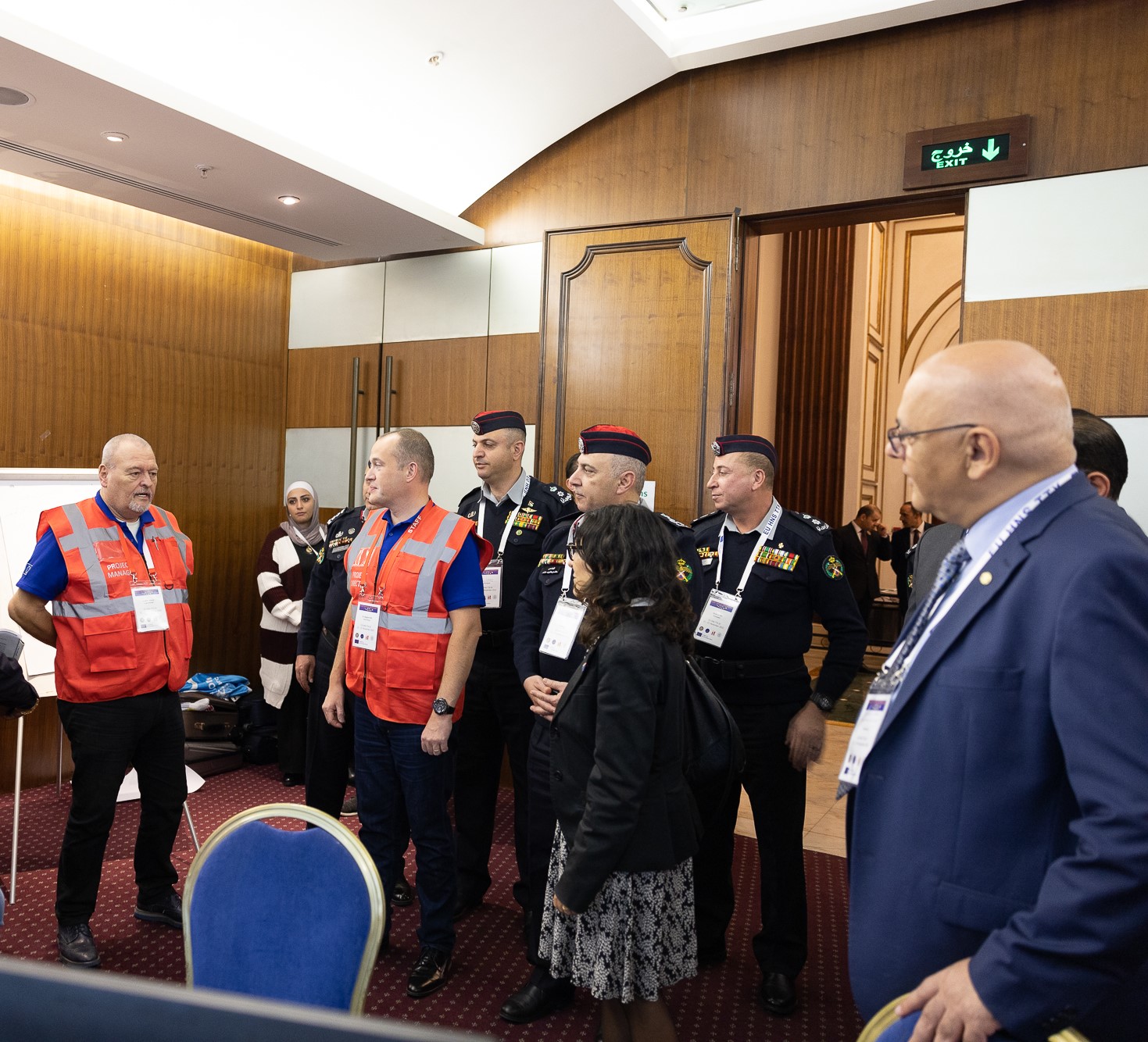
EU HNS TTX Jordan: A brief review of a busy project. More than 60 civil protection experts from 12 countries contributed their experience to the November 20-23 Host Nation Support staff exercise (tabletop), conducted in cooperation with the Public Security and Civil Defense Directorate of the Hashemite Kingdom of Jordan.
The exercise lasted two and a half days, including the activation and handover phases plus a preparation day for the Jordanian participants. This exercise simulates all elements of the operational process for providing support to host international forces, from RfA (Request for Assistance) to redeployment and handover procedures. A MEL (Main Event List) and MIL (Main Inject List) were recreated, the virtual reality simulations were developed, and the final exercise setup was completed. Together with the Jordanian Civil Defense (CDD) officers and the European Union Civil Protection experts (EUCPT and UCPM modules), the EU-HNS consortium staff will simulate a natural disaster with international participation.
Prior to the exercise, the newly created EU HNS Online e-learning platform went online. After registering, participants were able to take the course on their own schedule until November 17. This online course is used to prepare for the tabletop exercise. The technical part, the learning platform of the online course was developed in close cooperation with DIE KRISENPLANER (The Crisis Planners – Connected in Crisis).
The publiComm team consisting of Josef H. Riener, MSc, Harald Mailer-Fellner, Michael Kollroser, Eva Kröpfl, Daniel Bointner Photography (www.danielbointner.at), Dr. Brigitta Sáfár, Dr. Timar Tamás, and our back office in Austria, Magdi Schlichtinger, Jimmy Zimmermann, Andre, and Barbara Debre did an excellent job. This included booking flights, booking accommodation, maintaining the list of participants, updating certificates, media coverage and part of the project documentation, VIP and observer management and ends with the contact to the hotel management.

“A very successful exercise, we could offer the participants a new and challenging learning experience. All relevant stakeholders on an emergency were present and we also had a visit from the acting head of the EU Delegation in Jordan. “Thanks to our dedicated exercise staff, highly motivated participants, and the massive contribution of the Jordan Civil Defense Directorate we could conduct a challenging exercise here in Amman successfully,” said Project Manager, Josef H. Riener.

EU HNS: stakeholder meeting in Amman

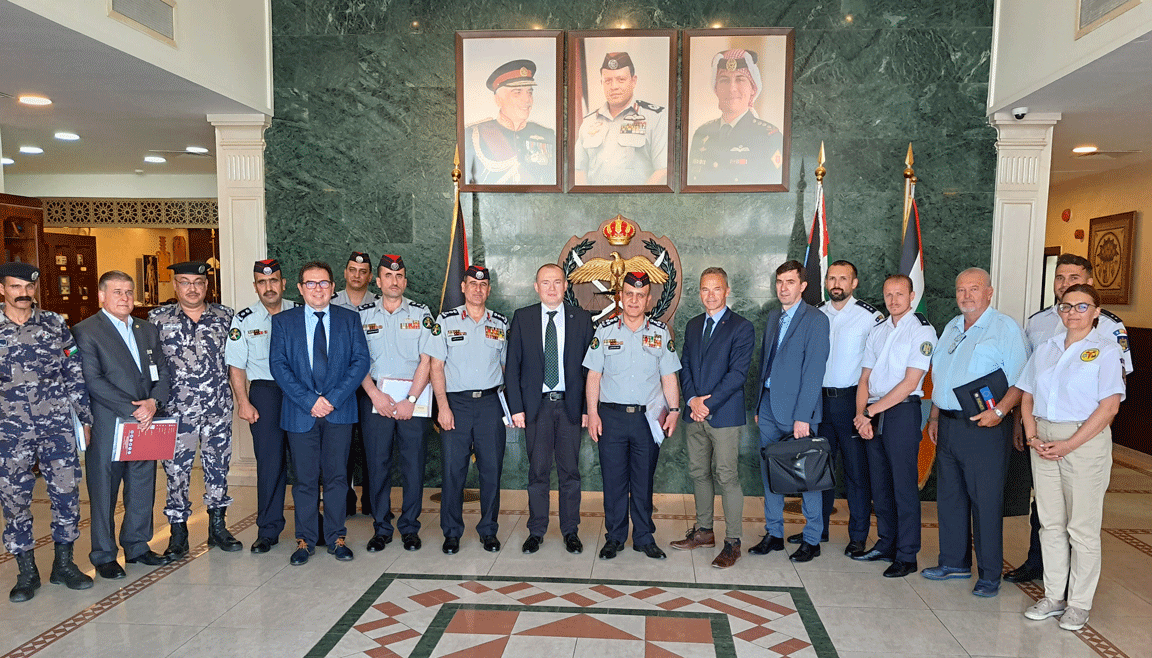
Amman: From July 3rd to 5th, we had the next important step in our project, the stakeholder meeting with the Public Security Directorate, Civil Defence Directorate of the Hashemite Kingdom of Jordan. Experts from the Romanian Department for Emergency Situations (Ministry of Interior), iHELP Institute, publiComm GmbH and the University of Târgu Mureș.

With us was the project officer from the European Union, Civil Protection, Geir Ellingsen. The project, a tabletop exercise on HNS (Host Nation Support), was presented and the framework was discussed. This international exercise will be conducted in Amman in November this year.
#euhns
#EUCivPro
#CivProKnowNet

EU HNS consortium meeting in Bucharest

Bucharest: From 1. May till 2. May we had a very successful consortium meeting at the Department of Emergency Situations of Ministerul Afacerilor Interne România. This internal kick-off meeting was very important for the project management, we discussed the internal communication, timeline of the project, milestones, deliverables and roles and responsibilities within the project. Thank you, Bogdan PopEmilia TuruczArtur Vladimir Sedei, and all partners for your high motivation and important contributions!
The next task will be to draft the project handbook…

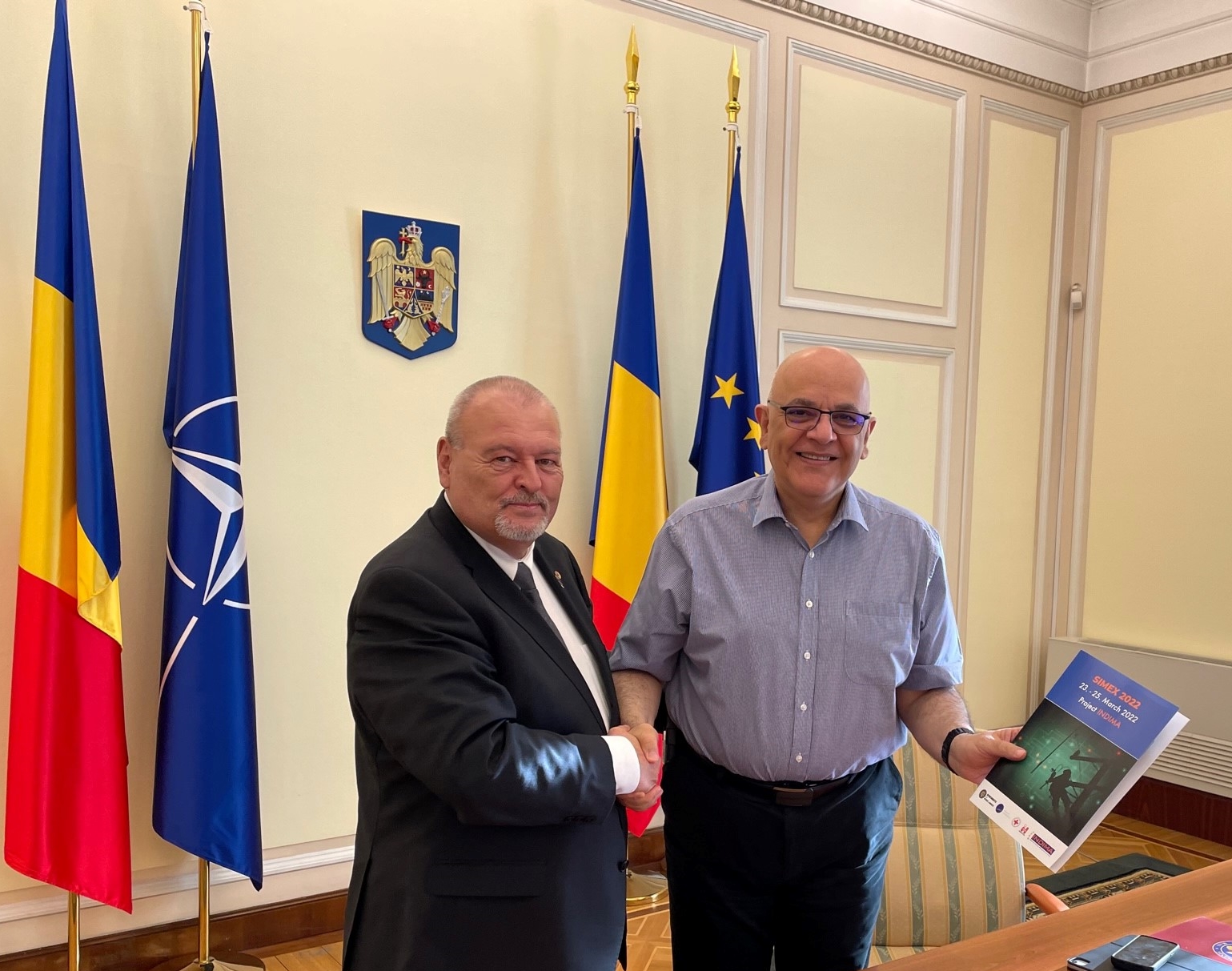
Photo: Josef H. Riener, MSc, left, Project Manager of EU HNS, with the head of Department of Emergency Situations, Romania, Secretary of State, Dr Raed Arafat.

SIMEX successfully completed

SIMEX, the simulation exercise of INDIMA project, had the aim to prepare the participants for new rchallenges in disaster management and to integrate all relevant stakeholders. In addition to the organisations of Civil Protection, these include representatives of “critical infrastructure” and private companies such as bus companies, construction companies, and telecom- and logistics providers. The use of state-of-the-art simulation techniques such as XVR Virtual Reality for the presentation of situations and feeds made the exercise very realistic, up-to-date and at the same time cost-effective.

INDIMA project, funded by the European Union, General Directorate for Humanitarian Aid and Civil Protection and was conducted in close cooperation with the Romanian Ministry of the Interior, (DSU – Department for Emergency Situations, Romania), the Hungarian Red Cross, iHELP Institute from Poland and publiComm GmbH, Austria in Timișoara, Romania on March 23-25. Austrian Red Cross, GQ, was involved in this project with several experts. The SIMEX had 78 participants, 37 of whom were involved in conducting the exercise and 39 as participants. The project will continue with a workshop in May 2022.

During the exercise, I had the honour to manage the exercise with Dr Bogdan Pop as project director and an excellent and very experienced team from Poland, Romania and Hungary. The result has exceeded our expectations, especially the possible applications of virtual and augmented reality simulations in the operational and strategic area of ​​disaster management in the near future.

New project: Host Nation Support exercises

With our partner company publicomm GmbH, we again took part in a tenderof the EU General Directorate for European Civil Protection and Humanitarian Aid, our consortium won the contract for two Host Nation Support (HNS) exercises. The contract comprises the design, planning, implementation and evaluation of two EU national support exercises for actors involved in the Union Civil Protection Mechanism. These exercises consist of an online preparation course and a tabletop exercise.

Two TTX are carried out in different countries, one outside the EU and one outside Europe, with different emergency management structures, with national, international and cross-border participation The concept is to introduce HNS as a “Train of Trainers” with prior online-training on UCPM and HNS to practice-oriented experts. Concept and curriculum are developed in cooperation with the consortium advisory board. A newly developed “HNS Toolkit” (paperback, training material, HNS manual with checklists) and the online training course will also be created.